1. What Is the EU PPWR?
The EU Packaging and Packaging Waste Regulation (PPWR) is a comprehensive piece of legislation that replaces the 1994 Packaging Directive (94/62/EC). It entered into force in February 2025, with most obligations generally applying from 12 August 2026, and further provisions phasing in through 2030.
The regulation applies to all packaging placed on the EU market — primary, secondary and transport packaging — regardless of the material or where it was manufactured. This means Chinese manufacturers that supply packaging to EU-market brands are directly in scope through their EU brand customers.
Brands that do not adapt their packaging to PPWR requirements risk losing market access for their EU operations. Early-moving brands are already specifying PPWR-compliant packaging in their supplier requirements — manufacturers that cannot provide compliance documentation are being delisted.
2. Key PPWR Requirements
Recyclability
By 2030, all packaging placed on the EU market must be recyclable. The regulation defines recyclability as "designed so that it can be recycled at scale" — meaning the packaging must actually be collected, sorted and recycled in existing EU waste management infrastructure, not theoretically recyclable in ideal conditions. Multi-material constructions that cannot be separated (plastic-laminated paper, mixed-fibre textiles) are particularly at risk.
Recycled Content Minimums
PPWR introduces mandatory minimum recycled content thresholds that increase over time. For plastic packaging, the minimums range from 10–35% by 2030 depending on packaging type, rising to higher thresholds by 2040. Paper and cardboard packaging is not subject to recycled content minimums under the current text, but recyclability requirements still apply.
Packaging Minimisation
The regulation requires that packaging weight and volume be minimised to the minimum necessary to fulfil its function. Empty space (void fill) in e-commerce packaging is specifically targeted — the ratio of empty space to product must meet defined thresholds. Oversized boxes for small products will face compliance issues.
Extended Producer Responsibility (EPR)
Brands placing packaging on the EU market must register with national EPR schemes and contribute financially to packaging waste collection and recycling infrastructure. EPR fees are typically passed through the supply chain, making lightweight packaging financially advantageous.
3. Implementation Timeline
| Date | PPWR Milestone | Action Required |
|---|---|---|
| 2025 | Regulation enters into force | Begin documentation of material composition and recyclability for all packaging |
| 2026 | EPR registration requirements active | Register with national EPR schemes in all EU countries where packaging is placed on market |
| 2028 | Initial recycled content targets | Plastic packaging must meet first-phase recycled content minimums |
| 2030 | Full recyclability requirement | All packaging must be recyclable; higher recycled content thresholds apply |
| 2035 | Reuse targets for certain formats | Specific packaging formats must offer reuse/refill options |
4. Which Materials Are PPWR-Compliant?
Paper and Board — Generally Compliant
Paper and board packaging is the clearest path to PPWR compliance. Uncoated paper and board is readily recyclable in existing EU infrastructure. FSC-certified sourcing provides the material traceability documentation that increasingly forms part of compliance reporting. Brands should avoid plastic lamination on paper packaging where possible — recyclability is compromised when paper and plastic cannot be separated.
Fabric Pouches — Depends on Material
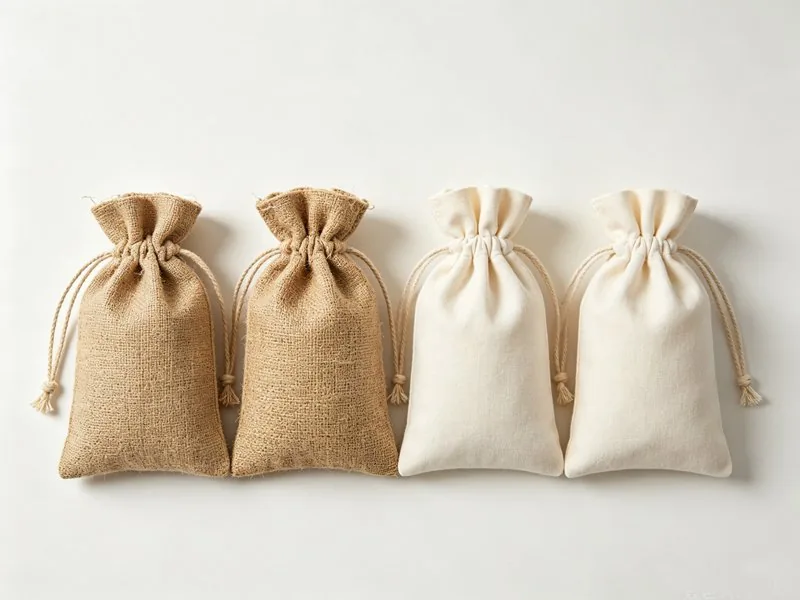
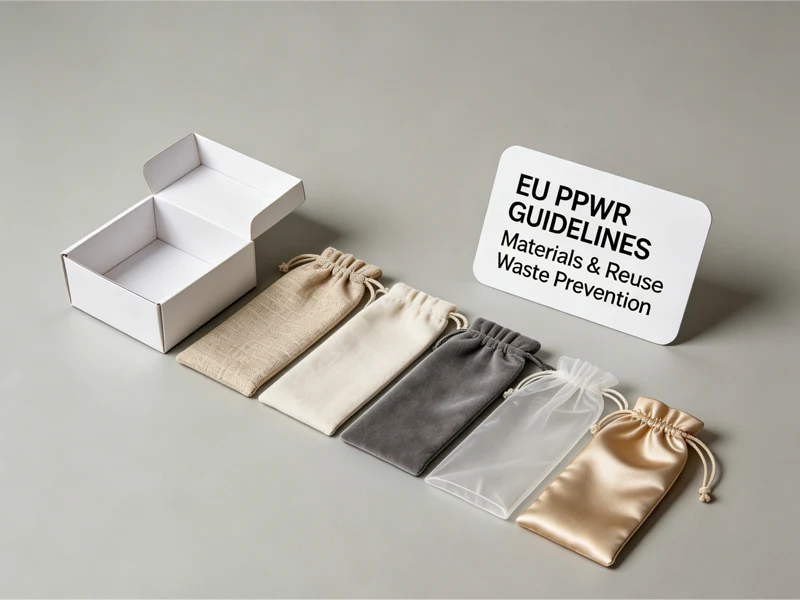
Natural fibre pouches (cotton, linen, jute) are generally considered sustainable and align with PPWR's intent, though they sit in a complex category as reusable/multi-use items. GRS-certified recycled polyester velvet and recycled nylon organza address the recycled content requirements. For brands wanting clear PPWR alignment on fabric packaging, specifying GRS-certified materials with recycled content documentation is the safest approach.
Rigid Gift Boxes — Review Required
High-quality rigid boxes that use paper/board construction with fabric lining present recyclability questions — the board and fabric components cannot be easily separated. Designs that eliminate the fabric lining, or use recyclable paper-based lining instead of velvet, are preferable under PPWR. Magnetic closure mechanisms (steel magnets embedded in board) also require review.
5. Working with Manufacturers to Achieve PPWR Compliance
The key documents you need from your packaging manufacturer to support PPWR compliance:
- FSC Chain of Custody certificate: For all paper and board components — confirms material traceability from sustainably managed forests
- GRS certificate: For recycled fibre or recycled synthetic content — confirms verified recycled material percentage
- Material composition declaration: Full list of materials by weight and component
- Recyclability statement: Manufacturer's declaration of which recycling stream the packaging belongs to
- REACH compliance statement: Confirms no prohibited substances in inks, coatings or adhesives
6. How Genesis Addresses PPWR
Genesis (Xiamen) Bags holds FSC Chain of Custody certification for all paper and board products, enabling full traceability documentation. Our eco-friendly product line includes:
- FSC-certified kraft paper and board (folding carton, rigid box, shopping bag formats)
- GRS-certified recycled polyester velvet for fabric pouches
- Organic cotton (GOTS-eligible) for cotton bags and pouches
- Natural linen and jute in biodegradable formats
- Plastic-free, recyclable mono-material paper constructions
All eco-product orders include the relevant certification documentation to support EU brand customers' PPWR compliance reporting.
Need PPWR-Compliant Packaging Documentation?
Request our FSC and GRS certification pack alongside your packaging sample. We provide all documentation needed for EU market compliance.
FAQ
What is the EU PPWR and when does it take effect?
The EU Packaging and Packaging Waste Regulation (PPWR) is new EU legislation that replaces the 1994 Packaging Directive. It sets mandatory requirements for recyclability, recycled content minimum thresholds, and packaging minimisation. It entered into force in February 2025, with most obligations generally applying from 12 August 2026, and further provisions phasing in through 2030. Brands selling packaged goods in the EU must comply or face market access restrictions.
Does PPWR apply to packaging manufactured in China?
Yes. PPWR applies to all packaging placed on the EU market, regardless of where it was manufactured. Chinese manufacturers that supply packaging to EU brands must be able to provide documentation supporting their EU brand customers' PPWR compliance — including material traceability, recyclability certification and recycled content statements.
What packaging materials are PPWR-compliant?
Paper and board packaging that is FSC-certified and free of problematic coatings (non-recyclable laminates, plastic windows) generally meets PPWR recyclability requirements. Fabric pouches in natural fibres (cotton, linen) and recyclable synthetic options (GRS-certified recycled polyester) also align with the regulation's intent. Avoid multi-material constructions that cannot be separated for recycling.
Do I need to change my velvet jewelry pouches to comply with PPWR?
Standard polyester velvet pouches are technically packaging accessories rather than primary packaging in most jewelry contexts, and may fall outside PPWR scope depending on the classification. However, the direction of travel is clear: EU buyers increasingly request GRS-certified recycled velvet or organic cotton alternatives regardless of strict legal requirement. Adapting proactively positions your brand ahead of compliance deadlines.