1. The Four Main Methods at a Glance
| Method | Best On | Durability | MOQ | Cost Impact | Setup Fee |
|---|---|---|---|---|---|
| Embroidery | Velvet, suede, canvas | Excellent | 500 pcs | +$0.15–0.40 | $20–50 (once) |
| Hot Stamping / Foil | Velvet, satin, suede | Very good | 100 pcs | +$0.05–0.15 | $30–80 (die) |
| Screen Printing | Cotton, satin, canvas | Good | 100 pcs | +$0.05–0.12 | $15–30/colour |
| Heat Transfer | Cotton, satin, nylon | Moderate | 100 pcs | +$0.08–0.20 | None |
2. Embroidery
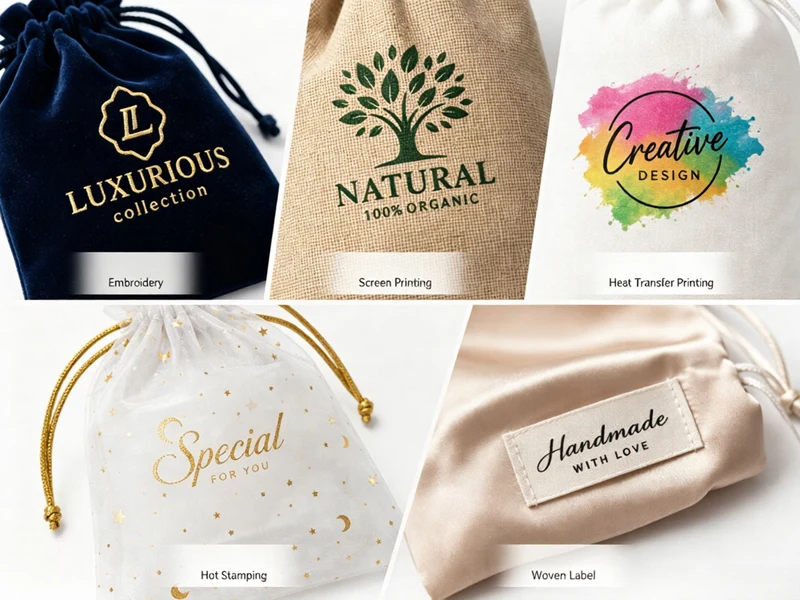
Embroidery produces a raised, tactile logo by sewing coloured threads directly into the fabric. The result is a permanent, dimensional logo that feels high-quality to the touch and reads as artisanal — it signals that the brand has invested in a premium finish.
When to Choose Embroidery
- Your brand has an artisan, handcraft or heritage positioning
- The pouch will be used as a long-term keepsake or reusable item (the logo will outlast the pouch)
- Your logo is relatively simple — text, monogram or basic icon (complex gradients cannot be embroidered)
- You are ordering 500+ pieces (lower volumes make the digitisation cost disproportionate)
Limitations
Embroidery cannot reproduce photographic detail, fine lines or colour gradients — the thread count limits complexity. Very small logos (under 15mm wide) may lose definition. Production time is slightly longer than other methods as each piece passes through the embroidery machine individually.
3. Hot Stamping / Foil
Hot stamping transfers a metallic or pigment foil onto the fabric surface using a heated metal die under pressure. The result is a flat, smooth, reflective logo — gold, silver, rose gold, or custom colours — that sits cleanly on the fabric without raising it.
Why Hot Stamping Dominates Jewelry Packaging
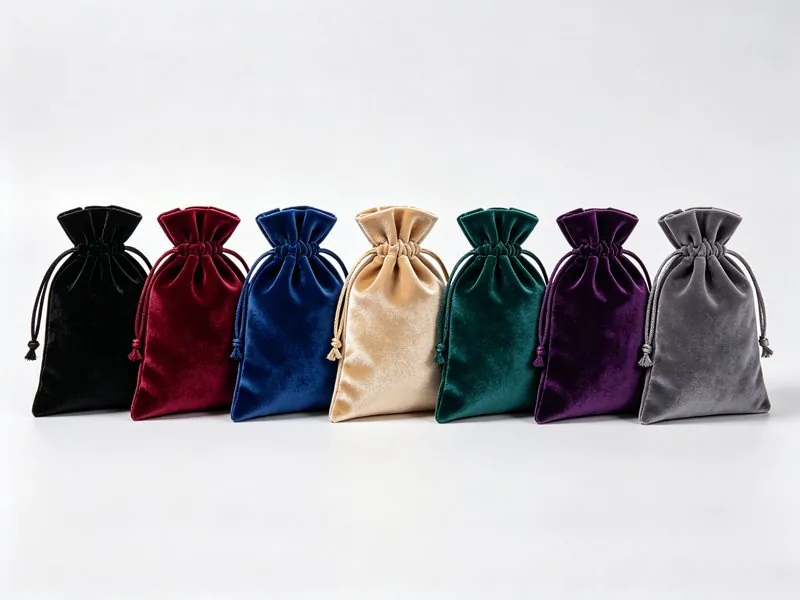
Hot-stamp gold foil on deep black velvet is the combination most associated with luxury jewelry worldwide. The contrast between the matte velvet texture and the metallic foil logo is visually striking and immediately communicates premium quality. It also works on matte satin and suede, where the metallic contrast is equally effective.
Design Requirements
Hot stamping is a single-colour process — one foil colour per application. Multi-colour logos require multiple passes (each with its own die and associated cost). The die creation requires a clean vector file; fine hairlines below 0.5mm may not reproduce reliably. Logos with filled areas stamp better than logos with very fine outlines.
4. Screen Printing
Screen printing forces ink through a fine mesh screen onto the fabric surface. Each colour requires a separate screen, making it most economical for 1–3 colour logos. It is the most versatile method for flat, smooth fabric surfaces.
Best Applications
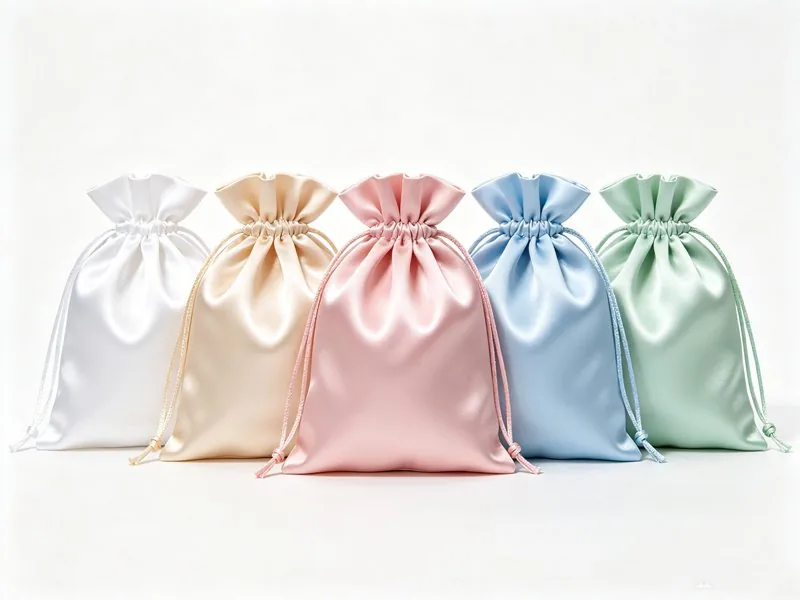
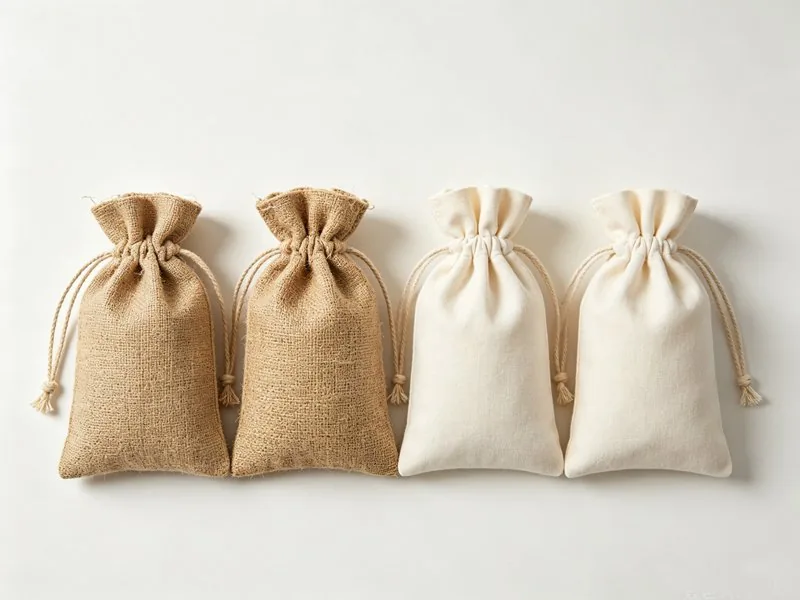
Cotton canvas totes, cotton muslin bags, satin pouches and non-woven bags are the best surfaces for screen printing. The flat, relatively smooth surface allows clean ink deposition without the pile interference that makes screen printing difficult on velvet. Full-colour simulation is possible using half-tone printing techniques.
5. Heat Transfer
Heat transfer printing produces a full-colour, photographic-quality image that is transferred to the fabric using heat and pressure from a carrier film. No screens or dies are required — the artwork is printed digitally, making it cost-effective for short runs and complex designs.
Trade-offs
Heat transfer logos have a slightly plastic feel compared to screen printing, and the transfer film can crack or peel with repeated laundering. For packaging pouches that will not be washed, this is generally acceptable. For reusable bags or totes that will see regular use, screen printing or embroidery are preferable for longevity.
6. Which Method for Your Brand?
- Luxury jewelry brand: Hot stamp gold/silver foil on black velvet. Industry default, no further analysis needed.
- Premium watch or pen brand: Embossing or hot stamp on suede. Understated and tactile.
- Wedding favour brand: Screen print on satin (1–2 colours, elegant font) or heat transfer for full colour designs.
- Eco/natural brand: Screen print on organic cotton canvas. Aligned with natural material aesthetic.
- Corporate gift programme: Embroidery on velvet or canvas for high-perceived-value; screen print for cost efficiency at 1,000+ pcs.
Not Sure Which Logo Method to Choose?
Request a logo method comparison sample — we'll produce your logo in two methods on swatches so you can compare before committing to bulk production.
Frequently Asked Questions
Which logo method is most durable on velvet pouches?
Embroidery is the most durable logo method for velvet and fabric pouches — the thread is woven into the fabric structure and will outlast the pouch itself. Hot stamping foil is also very durable when applied correctly, lasting 3–5+ years without fading. Screen printing is moderately durable but may fade with repeated washing. Heat transfer is the least durable for items that will be frequently handled.
Can I have full-colour printing on a velvet pouch?
Full-colour printing is not recommended on velvet due to the textured pile surface, which causes ink to sit unevenly. For full-colour logo requirements, cotton or satin pouches are better suited — screen printing or heat transfer delivers clean, vibrant results on smooth fabric surfaces. On velvet, stick to single-colour hot stamping or embroidery for best results.
What logo file format do I need to provide?
For embroidery, a vector file (AI or EPS) or high-resolution PNG (minimum 300 DPI at print size) is required for digitisation. For hot stamping, a vector AI or EPS file is needed to create the metal die. For screen printing, vector files or high-resolution raster files work. For heat transfer, high-resolution print-ready artwork (300 DPI) at the final print size is required.
How much does a custom logo add to the pouch cost?
Logo setup costs vary by method: embroidery typically requires a one-time digitisation fee of USD 20–50 (waived on repeat orders); hot stamping requires a metal die costing USD 30–80; screen printing requires a screen fee of USD 15–30 per colour. Per-unit logo costs add approximately USD 0.05–0.25 per piece depending on method and complexity, with unit costs decreasing significantly at higher volumes.