What Determines Custom Packaging Pricing
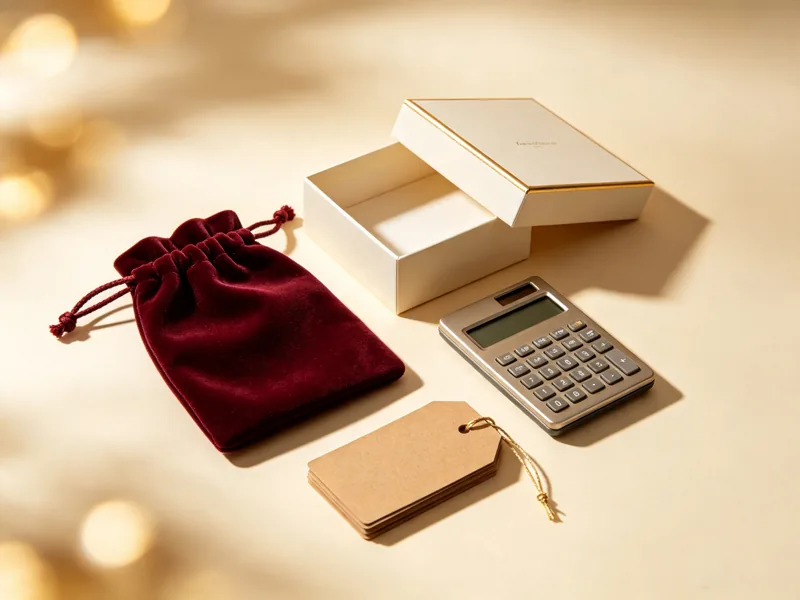
Five variables account for most of the difference between a quote of $0.30 per piece and $3.00 per piece for what looks, at a glance, like a similar product: material (cotton vs. velvet, standard board vs. FSC-certified board), quantity (unit cost drops significantly at higher volumes as setup costs are spread across more pieces), customisation level (a standard colour and logo costs far less than full Pantone matching with a bespoke structural design), logo/finishing method (screen printing is cheaper than embroidery or hot foil stamping), and internal components (foam inserts, velvet lining and ribbon pulls all add cost).
Price Ranges by Product Category
As a general guide, based on standard customisation at moderate volume:
| Category | Typical Range (USD/pc) | What Moves the Price |
|---|---|---|
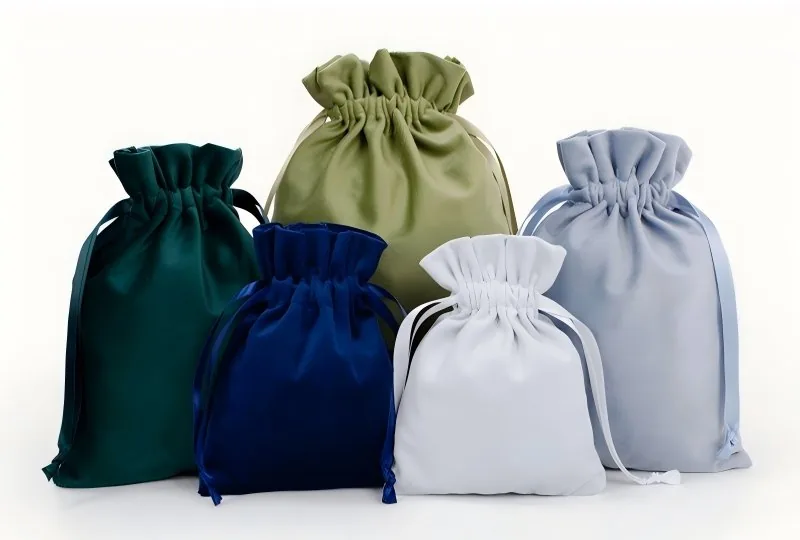
| Fabric pouches (velvet, satin, cotton, linen, organza) | $0.25 – $1.50 | Fabric type, embroidery vs. print, drawstring style |
| Rigid gift boxes | $0.80 – $6.00 | Board thickness, lid style, foil stamping, inserts |
| Mailer boxes | $0.50 – $1.80 | Board grade, print coverage, structural complexity |
| Paper shopping bags | $0.30 – $1.20 | Paper weight, handle type, print colours |
These ranges assume standard MOQ-level orders (100–500 pieces). At higher volumes, unit prices at the lower end of each range become realistic even with meaningful customisation.
How Order Quantity Changes Your Unit Price
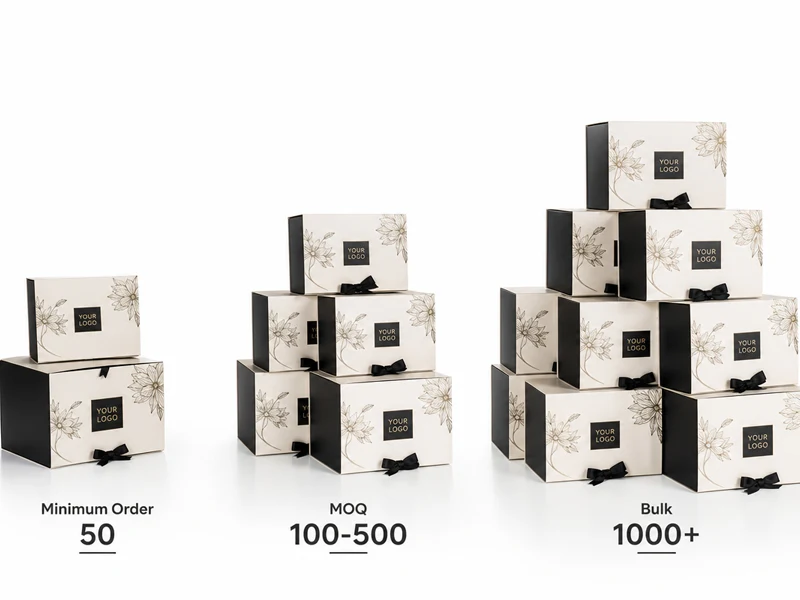
Bulk discounts in packaging manufacturing aren't arbitrary — they reflect real fixed costs (die-cutting setup, print plate preparation, colour matching) being spread across more units. Meaningful price breaks typically appear at 500, 1,000, 5,000 and 10,000 piece thresholds. The jump from 100 to 500 pieces is usually the largest percentage saving; gains above 5,000 pieces tend to flatten unless you're also changing material sourcing at that scale.
If your target volume is close to a threshold — say, 450 pieces — it's often worth asking your supplier whether rounding up to 500 changes the unit price enough to make the extra pieces effectively free.
Want an Itemised Quote for Your Specification?
Send us your product type, target quantity and any customisation ideas, and we'll reply within 24 hours with a detailed, itemised quote — no guessing what's included.
Hidden Costs to Budget For
- Sample cost: Standard-style samples are usually free (you pay shipping); fully custom samples are charged at cost, typically refundable against a bulk order of 500+ pieces
- Plate/die charges: Screen printing and hot foil stamping involve a one-time setup fee for the plate or die, separate from the per-piece cost
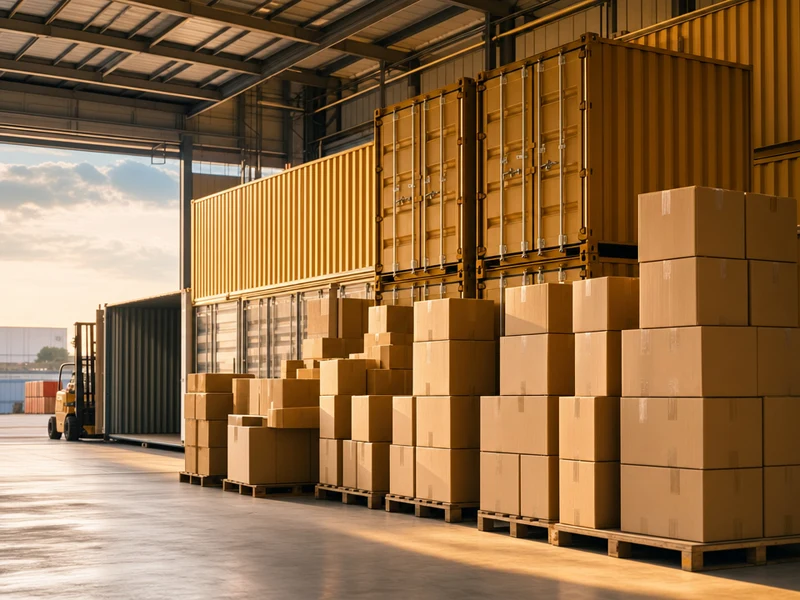
- Freight and duties: Air express is fastest but most expensive per kilogram; sea freight is far cheaper at volume but adds weeks of lead time — and import duties in your destination country are calculated separately from the product cost
- Certification premiums: FSC-certified paper and board typically cost more than uncertified equivalents, which matters increasingly for EU market compliance
- Inspection fees: A pre-shipment quality inspection (in-house or third-party) is worth budgeting for on larger orders, even if it adds a small cost
How to Get an Accurate Quote Fast
The fastest way to get a quote that doesn't need three rounds of revision is to include, in your first message: product type and rough dimensions, target quantity, material preference (if you have one), logo/print method (or ask for a recommendation), and any certification requirements (FSC, for example, if you're selling into the EU). Suppliers can usually turn around a same-day or 24-hour quote when the specification is clear from the start.
FAQ
What is the cheapest type of custom packaging?
Fabric drawstring pouches are typically the lowest-cost custom packaging option, starting around USD 0.25 per piece at volume for a standard cotton or non-woven pouch with a simple one-colour logo. Cost rises with fabric type (velvet and satin cost more than cotton), embroidery versus screen printing, and added components like ribbon drawstrings or inserts.
Do I need to pay for the printing plate or mould separately?
It depends on the method. Screen printing and hot foil stamping require a one-time plate or die charge, usually a modest fixed fee that's either invoiced separately or absorbed into the unit price at higher volumes. Digital printing and embroidery typically don't require a plate, which is why they're often preferred for smaller runs or designs with many colours.
How much does a custom packaging sample cost?
Samples in a standard style are usually free, with the buyer covering shipping. Fully custom samples — a new structural design, a non-standard colour requiring Pantone matching, or a bespoke logo method — are typically charged at cost, and reputable suppliers refund that cost against your first bulk order, commonly once it reaches 500 pieces or more.
Why do quotes vary so much between suppliers for what looks like the same product?
The specification behind a quote often isn't as identical as it looks on paper. Material weight and grade, certification status (FSC-certified paper costs more than uncertified), print method, and whether the price includes packing and inspection all vary. Always ask a supplier to itemise what's included, and confirm you're comparing the same material grade and logo method before comparing numbers.