Because the single most expensive mistake I see overseas brands make in custom packaging has nothing to do with budget or lead time. It's this: they approve a design on a glowing screen and expect it to reappear, identically, across ten thousand physical boxes. It never does. Here is exactly why — and how professionals prevent it.
The illusion: a screen and a printed box can never match
A screen emits light. Ink reflects it. Those are two different physical phenomena, and they cover two different ranges of color. On a monitor you're looking at RGB — additive, luminous, backlit. A printed box is CMYK — subtractive, reflective, dependent on the paper, the coating, and the light in the room. The color spaces genuinely do not overlap completely. So when a client sends an RGB file, or specifies a Pantone number but asks for standard four-color printing, or photographs an office-printer proof and says "I want this color," they've already set a trap. The screen made a promise the press physically cannot keep.
When it goes wrong, the run comes back gray, dull, or off-shade. And the cost is never just a few wasted boxes. It's reprinting the entire order, air-freighting replacements to hit a deadline, and — the worst case — getting rejected by a retailer because the brand color on the shelf is wrong.
The four real reasons it keeps happening
1. The design side doesn't know print. Many overseas designers come from graphic or brand backgrounds. They live in RGB and judge color on a screen. That's not incompetence — it's a different craft. But screen color and press color are not the same craft, and no one told them.
2. Color gets "confirmed" over screenshots. Between an overseas client and a factory sit time zones, language, and often a middleman. Color approval degrades into emailed images and chat screenshots — across monitors with different color temperatures and brightness. A screenshot is close to worthless for judging a physical color.
3. The middleman passes the file but not the spec. A trading company or purchasing agent forwards the artwork to the factory without the brand color standard, the Pantone reference, or the print process. The factory defaults to four-color printing; the client inspects against the brand color they remember. Both sides did their job, and it still ends in a dispute.
4. Someone skips the on-press proof to save money. The client treats a digital proof as the production standard. But a digital proof is inkjet or laser output — it is not offset, flexo, or gravure on the actual substrate. Skipping the press proof saves a little time and a little cost, and risks the entire run.
| Cause | What actually happens |
|---|---|
| The design side doesn't know print | Designers live in RGB and judge color on a screen — a different craft from press color |
| Color gets confirmed over screenshots | Approval degrades into emailed images across monitors with different color temperature and brightness |
| The middleman passes the file but not the spec | The factory defaults to four-color; the client inspects against a remembered brand color |
| Someone skips the on-press proof | A digital proof is inkjet or laser output — not offset, flexo or gravure on the real substrate |
The fix, in the order a professional runs it
Standardize the source file. CMYK or spot color. Pantone C or U specified explicitly. Text converted to outlines. 3mm bleed. Images at 300dpi or higher. This is non-negotiable and costs nothing.
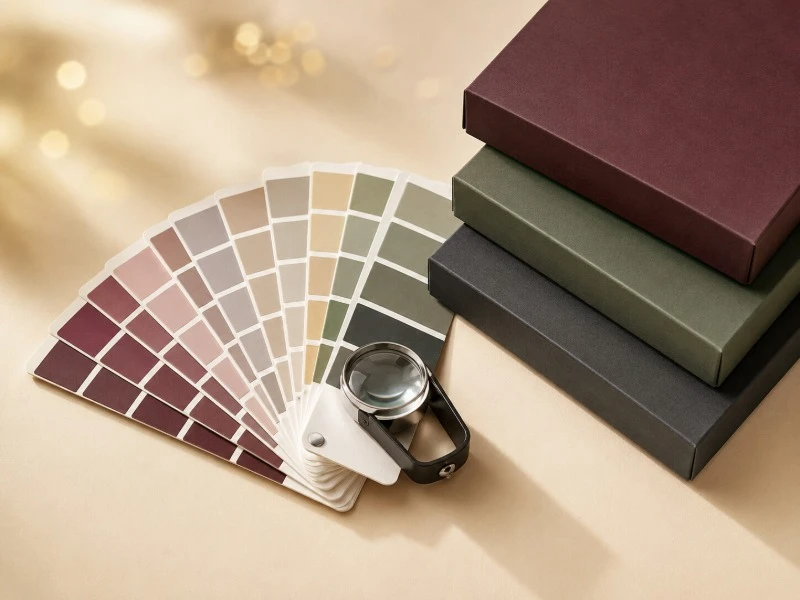
Confirm color with a physical object, never a screen. The client sends a physical swatch or signed sample, or specifies an exact Pantone number. No email, no chat, for color. If the brand color is critical, add a spot color — the added cost is minor next to a reprint.
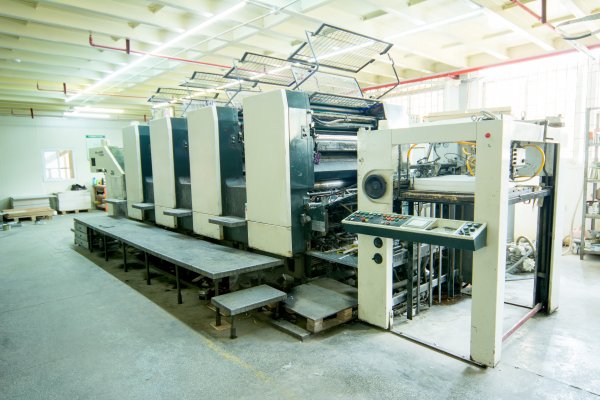
Proof in two stages, and only produce against a signature. First a digital proof to confirm content, structure, and text. Then an on-press proof to confirm color, material, and finish. Once the client signs the press proof, that signed sample is the acceptance standard. Write a color tolerance into the contract — for example ΔE ≤ 2.0. Out of spec means reprint. Now everyone is measuring against the same physical object, not a memory.
Don't stop at the flat design. A box needs a white-sample fit test: assemble it, pack the real product, weigh it, drop it. For sea freight and e-commerce, run ISTA transit testing. Plenty of clients confirm only the appearance — and then boxes collapse, seams pop, and product arrives crushed on another continent.
Bring the factory's engineers in at the design stage. Not after the artwork is locked and it's time to request a quote — at the start. Most of these traps are avoidable on the drawing board. The earlier the people who actually run the press are in the room, the fewer surprises land at the warehouse.
The mindset shift
Every one of these fixes comes down to a single change in how you think about packaging. A package is not an image. It's an engineered product that has to pass through a physical process and survive the real world. The design file is where it starts. The signed press proof is where production actually begins. Treat the file as the finish line and you will pay for it — in reprints, in air freight, in rejected shipments, in lost shelf space.
This is the standard we build into every custom order at Genesis Bags (genesisbags.com). Not because "close enough" is impossible to hit, but because on color, on structure, and on transit survival, "close enough" is precisely how a brand loses an entire shipment. The rigor that a material demands when it can't be allowed to fail is the same rigor a serious package deserves.
Frequently Asked Questions
Why doesn't my printed packaging match what I saw on screen?
A screen emits light and ink reflects it — two different physical phenomena covering two different ranges of color. A monitor shows RGB, additive and backlit; a printed box is CMYK, subtractive and dependent on the paper, the coating and the light in the room. The color spaces genuinely do not overlap completely, so a design approved on a monitor cannot reappear identically across ten thousand boxes.
What color tolerance should I write into a packaging contract?
Specify a measurable tolerance such as ΔE ≤ 2.0, with out-of-spec meaning reprint. That way both sides are measuring against the same physical object rather than a memory, and there is an objective basis if the bulk run drifts. Pair it with an explicit Pantone reference (C or U stated) and, where the brand color is critical, a spot ink — the added cost is minor next to a reprint.
Do I still need an on-press proof if I've approved a digital proof?
Yes. A digital proof is inkjet or laser output — it is not offset, flexo or gravure on your actual substrate, so it cannot confirm color, material or finish. Proof in two stages: a digital proof to confirm content, structure and text, then an on-press proof to confirm color, material and finish. Once you sign the press proof, that signed sample becomes the acceptance standard for the run.
How should color be confirmed with an overseas factory?
Never over a screen. Send a physical swatch or signed sample, or specify an exact Pantone number — no email attachments and no chat screenshots for color, because those travel between monitors with different color temperatures and brightness. Standardize the source file too: CMYK or spot color, Pantone specified explicitly, text converted to outlines, 3mm bleed, images at 300dpi or higher.
Genesis Bags (genesisbags.com) is a factory-direct custom packaging manufacturer in Xiamen, China — velvet pouches, satin bags, cotton & linen bags, magnetic gift boxes, rigid boxes and drawer boxes. OEM/ODM, MOQ from 100 pcs, worldwide shipping. Send us your brand color standard and we'll tell you exactly how to lock it before production.