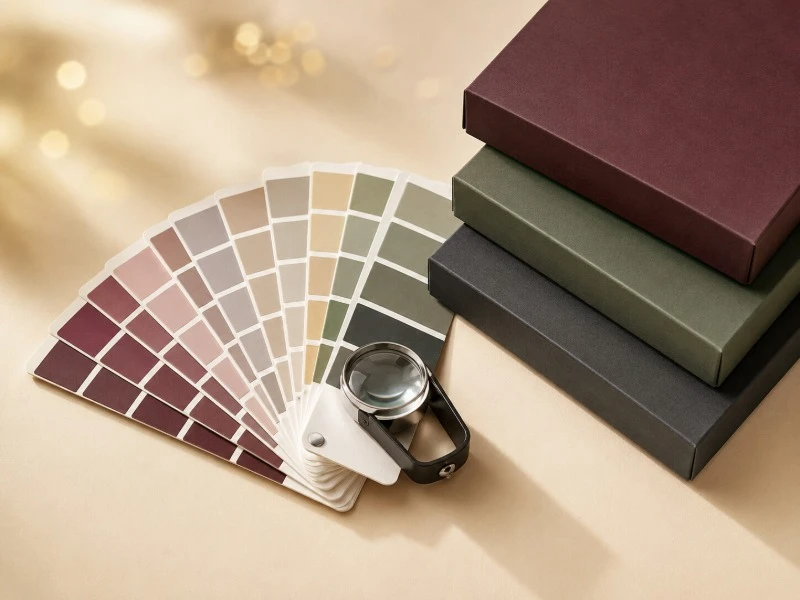
Here's the uncomfortable part: the factory wasn't necessarily cutting corners. "Card" is a category, not a spec. Under that one word sit solid bleached board, gray-back duplex, coated card, and more — and their rigidity and price can differ by a factor of two. The client thought they'd specified the material. They'd specified a category, and left the rest for the factory to guess. And a factory guessing without a clear spec will default to the cheaper option nearly every time.
Material and process traps are more insidious, and more expensive, than color problems — precisely because they hide inside a single word. Here's how to stop guessing.
A material name is a category, not a specification
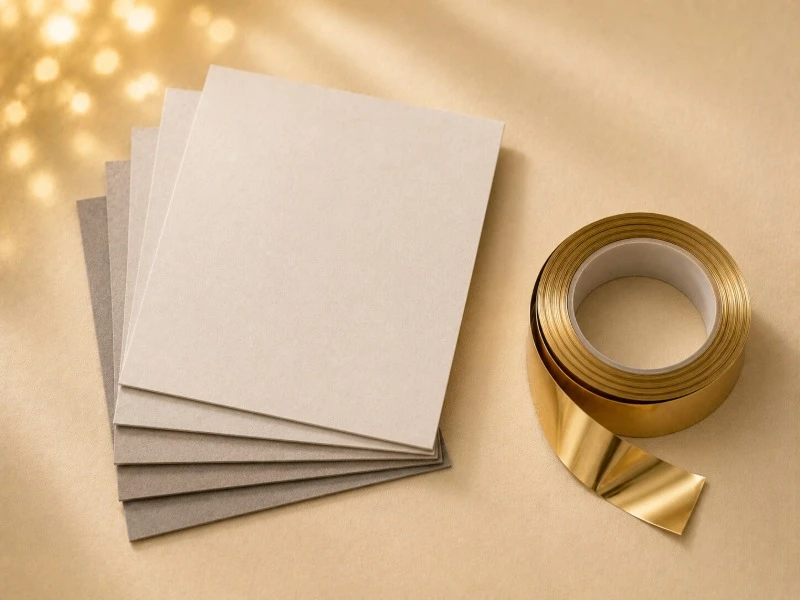
"400gsm" tells you the weight and nothing else. It doesn't tell you which board, what rigidity, what surface, or even what color the reverse side is. Two boards at the same 400gsm — solid bleached board and gray-back duplex — are entirely different objects: one stands up and has a clean white back, the other slumps and shows gray.

I spent years working with materials where "how does it behave" was the only question that mattered, and packaging board is no different. A material name tells you roughly what something is; it doesn't tell you how it will behave. Rigidity, weight, fiber, and coating are what decide whether a box stands up or sags — and none of them are captured by a category word. The fix is to make the spec real: provide a physical paper sample, state the board type, brand, weight, and rigidity, and sign off on it. Don't let a category word make the decision for you.
A process name doesn't mean it fits your design
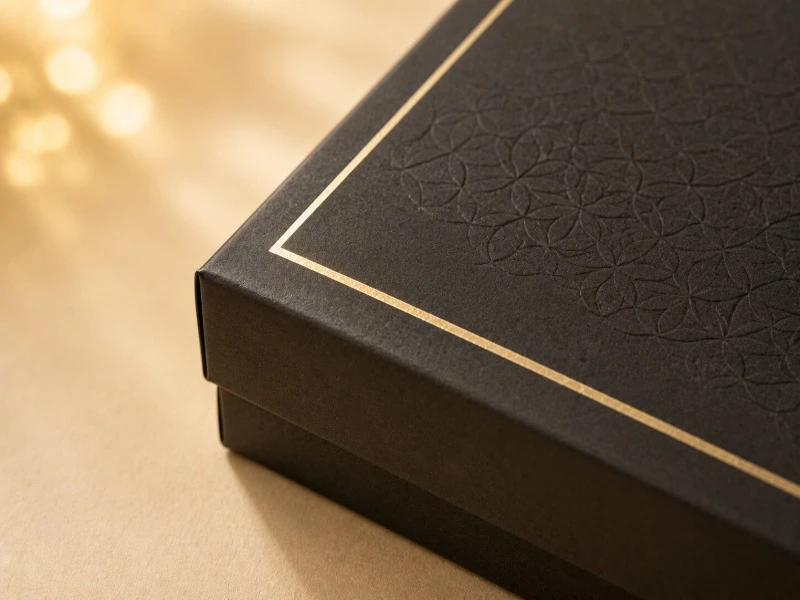
A US client insisted on hot foil across a large area. The result came back full of pinholes, flaking, and blurred edges. That wasn't poor workmanship — it was physics. Hot foil works by pressing heated metallic film onto paper, and on fine lines and small areas it's clean. Over a large area, the heat and pressure distribute unevenly and trapped air can't escape, and you get pinholes and sand-like voids. It's the physical limit of the process, not a failing of the factory.

The fix was to switch to foil on the small areas (logo, lines) and a metallic-gold ink print for the large area — which hit the look and came in 40% cheaper. The lesson: when choosing a process, the question isn't "can you do it," it's "will this process come out clean at my coverage, on my material." A good factory will stop you from insisting on a process that can't work — rather than run it and charge you for the rework.
Three quiet myths that cost money
| Belief | Reality |
|---|---|
| Lamination waterproofs a box | It resists moisture, dirt and abrasion but does not waterproof; matte lamination also lowers color saturation |
| UV works anywhere | It performs poorly on dark paper and cracks along folds — run it over a crease and it splits after a few open-and-close cycles |
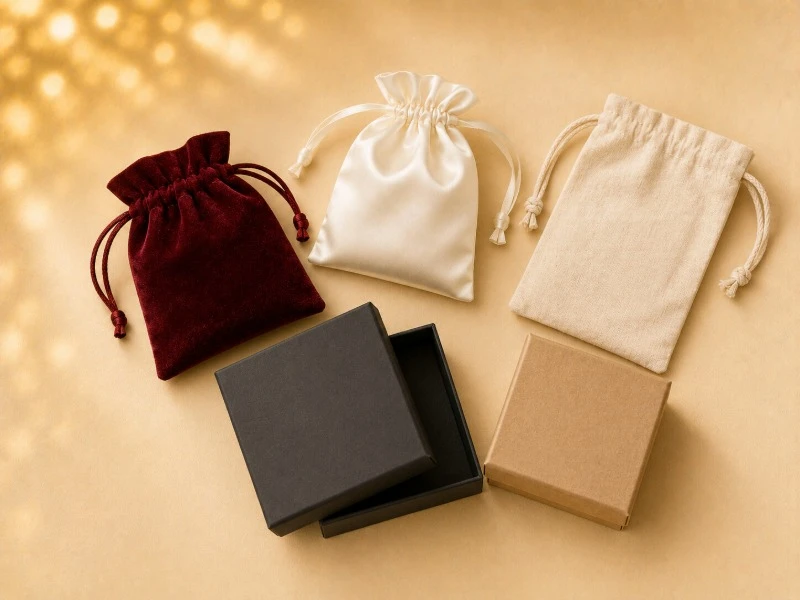
| Fabric can be mounted as supplied | It must be pre-shrunk and backing-treated first, or it shrinks, bubbles and bleeds adhesive weeks later |
Lamination isn't waterproof. It resists moisture, dirt, and abrasion — but it doesn't waterproof a box. And matte lamination lowers color saturation, so if you're counting on film to make packaging water-resistant, or you didn't expect your colors to go muted, you'll be disappointed on arrival.
UV has limits. Gloss, spot, and reverse UV each have their uses, but UV performs poorly on dark paper and tends to crack along folds. Run UV over the crease of a folding box and it splits after a few open-and-close cycles.
Fabric needs preparation. Before fabric is mounted onto a box, it has to be pre-shrunk and backing-treated, or it shrinks, bubbles, and bleeds adhesive. Skip that step and a beautiful fabric-wrapped box blisters weeks later.
The one rule
Material and process can't be communicated by name alone — they have to be pinned down with physical samples and a signed process proof. A material name and a process name are the start of the conversation, not the end of it. Everything left unspecified is a decision someone else will make for you, later, cheaply.
At Genesis Bags (genesisbags.com) we won't start production on a vague material name. We'll push back until it's a real spec — which board, which brand, what weight, what rigidity — send you a physical paper sample, and prove the finish on your actual material at your actual coverage before the bulk run. A supplier asking these questions before you order isn't being difficult. It's the difference between a spec and a guess — and on a full container, that difference is worth a hundred thousand.
Frequently Asked Questions
Is "400gsm card" a specification?
No — it's a category. 400gsm tells you the weight and nothing else: not which board, what rigidity, what surface, or even what color the reverse side is. Two boards at the same 400gsm, solid bleached board and gray-back duplex, are entirely different objects: one stands up and has a clean white back, the other slumps and shows gray, and their price can differ by a factor of two. A factory guessing without a clear spec will default to the cheaper option.
How do I specify a packaging material properly?
Make the spec real. Provide a physical paper sample, state the board type, brand, weight and rigidity, and sign off on it. Rigidity, weight, fiber and coating are what decide whether a box stands up or sags, and none of them are captured by a category word. Everything left unspecified is a decision someone else will make for you later, cheaply.
Why did my large-area hot foil come out with pinholes?
Physics, not poor workmanship. Hot foil works by pressing heated metallic film onto paper, and on fine lines and small areas it is clean. Over a large area the heat and pressure distribute unevenly and trapped air can't escape, producing pinholes, flaking and blurred edges. The usual fix is foil on the small areas — logo and lines — with a metallic-gold ink print for the large area, which hits the look and typically comes in around 40% cheaper.
Is lamination waterproof, and does UV work on everything?
No to both. Lamination resists moisture, dirt and abrasion but does not waterproof a box, and matte lamination lowers color saturation. UV performs poorly on dark paper and tends to crack along folds, so running it over the crease of a folding box means it splits after a few open-and-close cycles. Fabric has its own rule: it must be pre-shrunk and backing-treated before mounting, or it shrinks, bubbles and bleeds adhesive weeks later.
Genesis Bags (genesisbags.com) is a factory-direct custom packaging manufacturer in Xiamen, China — rigid boxes, magnetic and drawer boxes, and pouches. OEM/ODM, MOQ from 100 pcs, worldwide shipping. Send us your design and we'll turn a vague brief into a real spec, with a physical sample to sign off before anything goes to production.