Nothing had changed about the box. What changed was that it finally did the job it was actually built for — surviving transit — and it failed, because it had only ever been tested doing the job it was never going to do: sitting still on a table.
This is the most dangerous failure mode in packaging, because it's invisible at the moment of approval. Sign-off is static. Shipping is not. A package that's only been checked on a desk hasn't been tested in the environment where it actually works — vibration, impact, humidity, and time. Here are the four ways transit breaks packaging that passed inspection, each one a real case, and what it takes to prevent them.
1. Vibration shakes a "perfect" fit apart
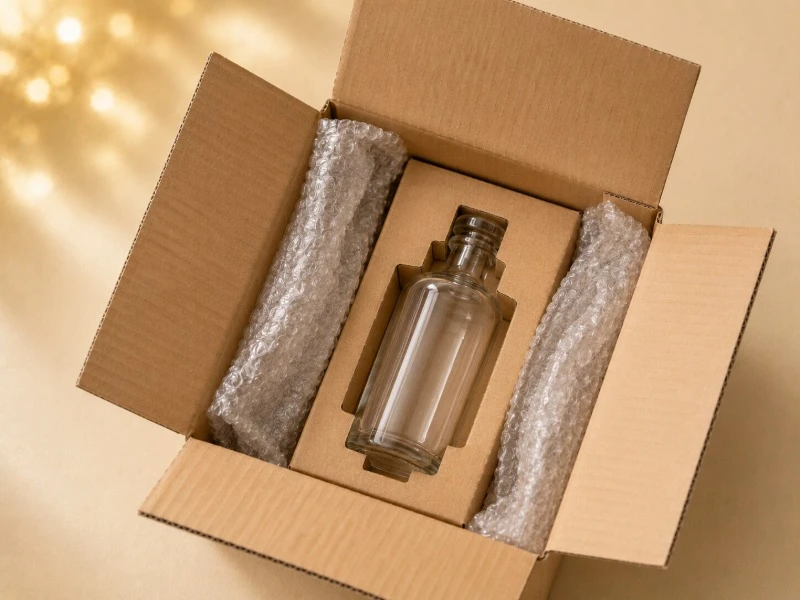
Back to that cosmetic box. The cardboard insert gripped the bottle perfectly while it sat still. But ocean freight is weeks of continuous vibration, and vibration slowly deforms a cardboard insert and works it loose. The bottle starts to move, then to knock against its neighbors, and eventually they break each other.

The lesson: an insert for anything fragile should never be cardboard, because cardboard has no resilience — once it deforms, it stays deformed. Use EVA, pearl cotton, or a vacuum-formed tray, which cushion and spring back. And confirm the design with vibration and drop testing, not a static check on a desk.
2. Load finds the weakest point in a handle
A European client ordered a wine carrier bag. The handle holes had no metal eyelets, the paper was on the thin side, and the cord was on the fine side. Loaded with two bottles — its actual maximum weight — the stress concentrated at the holes, the holes tore, the cord pulled free, and the bottles hit the ground at the customer's feet.
The lesson: any carrier bag has to be hang-tested at the maximum weight it will really carry, not judged by how an empty bag feels in the hand. Add metal eyelets to spread the load, make the paper thick enough, make the cord strong enough. The rule for any load-bearing part is to design for the worst case, not the average one.
3. Moisture destroys a container nobody protected
A Middle-East food gift set shipped with no moisture protection at all. The container crossed the equator through heat and high humidity, and the boxes absorbed moisture, grew mold, delaminated as the glue failed, and warped. The whole container was written off on arrival.
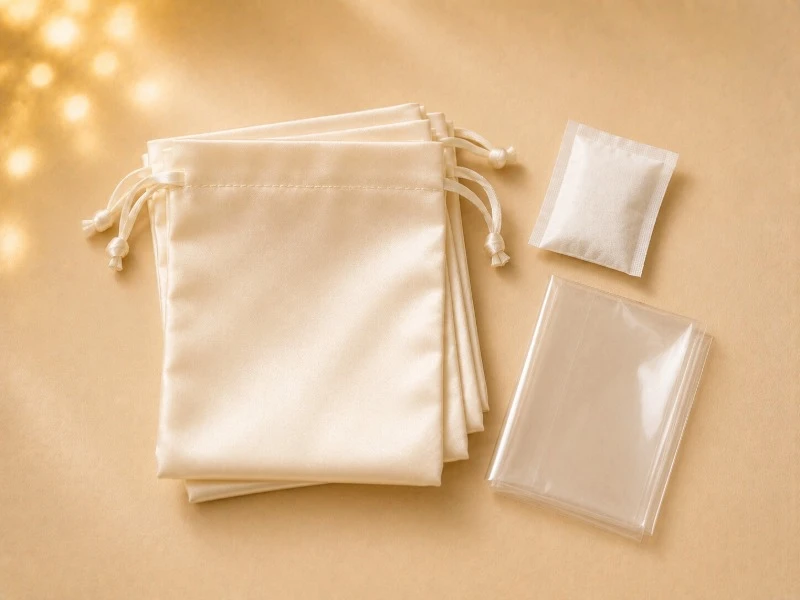
The lesson: ocean freight is a humidity-uncontrolled environment, especially on tropical routes, and protection is layered. The product goes in a PE bag with desiccant; the box gets a moisture-barrier film; the outer carton is moisture-resistant corrugate; the whole load is palletized, wrapped, and kept off the floor. Each layer is cheap. Together they stop a container-sized loss.
4. E-commerce is a stress test disguised as delivery
A US client packed ceramic mugs in an ordinary printed box, straight, with no cushioning. That's retail thinking: the box only has to look good on a shelf. But e-commerce isn't a shelf — a parcel goes through automated sorting, gets thrown, stacked, and dropped. It's a violent stress test wearing the costume of a delivery. The mugs shattered, and the reviews followed.
The lesson: e-commerce packaging has to be designed for transit, not display. Run an ISTA-6-Amazon style test, upgrade the insert to pearl cotton, and reinforce the outer carton. Retail packaging and e-commerce packaging are two different things; the same product needs different protection in each channel.
| Failure | Cause | Prevention |
|---|---|---|
| Vibration shakes a perfect fit apart | Cardboard inserts deform under weeks of vibration and never spring back | EVA, pearl cotton or vacuum-formed trays; confirm with vibration and drop testing |
| Handle tears under real load | Stress concentrates at unreinforced holes in thin paper with a fine cord | Metal eyelets to spread load; hang-test at maximum real weight |
| Moisture destroys the container | Ocean freight is humidity-uncontrolled, especially on tropical routes | Layer it: PE bag and desiccant, moisture-barrier film, moisture-resistant carton, palletized and off the floor |
| E-commerce parcel handling | Automated sorting throws, stacks and drops the parcel | Design for transit, not display: ISTA-6-Amazon style testing, pearl cotton insert, reinforced outer carton |
The quick failure checklist
The same "fine on the desk, broken in use" pattern hides in a dozen smaller places: drawer boxes with a pull tab that tears off the first time; magnetic boxes whose magnets are too weak, so the lid drifts open; lid-and-base boxes too tight to open or too loose to stay shut; pouch seams that split; and dimensions that ignore shelf modules or container-loading modules, quietly wasting space and money on every unit. None of these show up in a static sign-off. All of them show up in use.
The pattern behind all of it is one idea: a box doesn't work in a showroom, it works in a container, on a truck, on a sorting line. So the question to ask of any packaging isn't "does it look right now" — it's "will it still be right after three weeks at sea, or one violent sort." At Genesis Bags (genesisbags.com) we design and test against the real conditions a package will face: the product's actual weight, the shipping method, the sales channel, and the way it will be handled. Static perfection isn't the acceptance standard. Arriving intact is.
Frequently Asked Questions
Why do products break in transit when the packaging passed inspection?
Because sign-off is static and shipping is not. A package checked on a desk has only been tested doing the job it will never do — sitting still. It hasn't been tested against vibration, impact, humidity and time. A cardboard insert can grip a bottle perfectly on a table and still work loose after weeks of continuous vibration at sea, at which point the bottles start knocking together and break each other.
What insert material should I use for fragile products?
Not cardboard. Cardboard has no resilience — once it deforms under vibration it stays deformed, and the product starts to move. Use EVA, pearl cotton or a vacuum-formed tray, which cushion and spring back, and confirm the design with vibration and drop testing rather than a static check on a desk.
How do I protect packaging from moisture during ocean freight?
In layers, because ocean freight is a humidity-uncontrolled environment, especially on tropical routes. The product goes in a PE bag with desiccant, the box gets a moisture-barrier film, the outer carton is moisture-resistant corrugate, and the whole load is palletized, wrapped and kept off the floor. Each layer is cheap; together they prevent a container-sized loss to mold, delamination and warping.
Can I use my retail packaging for e-commerce?
Not without redesigning it. Retail thinking assumes the box only has to look good on a shelf, but a parcel goes through automated sorting and gets thrown, stacked and dropped — a violent stress test wearing the costume of a delivery. E-commerce packaging has to be designed for transit: run an ISTA-6-Amazon style test, upgrade the insert to pearl cotton, and reinforce the outer carton.
The time to catch a transit failure is before the container leaves, not after. Genesis Bags (genesisbags.com) is a factory-direct custom packaging manufacturer in Xiamen, China — rigid boxes, pouches, magnetic and drawer boxes, with inserts and transit testing built into the process. OEM/ODM, MOQ from 100 pcs, worldwide shipping. Tell us the product and the route, and we'll design it to arrive intact.