Not because the factory is punishing you for being small, but because the fixed costs of custom packaging don't shrink with your order. Fifty units and five thousand units carry almost the same fixed cost; spread across fifty, that cost lands hard on every piece, and the per-unit price looks alarming. That's the entire logic of a minimum order quantity — and once you understand it, you also understand how to get around it. Here's both.
Why the fixed costs don't shrink
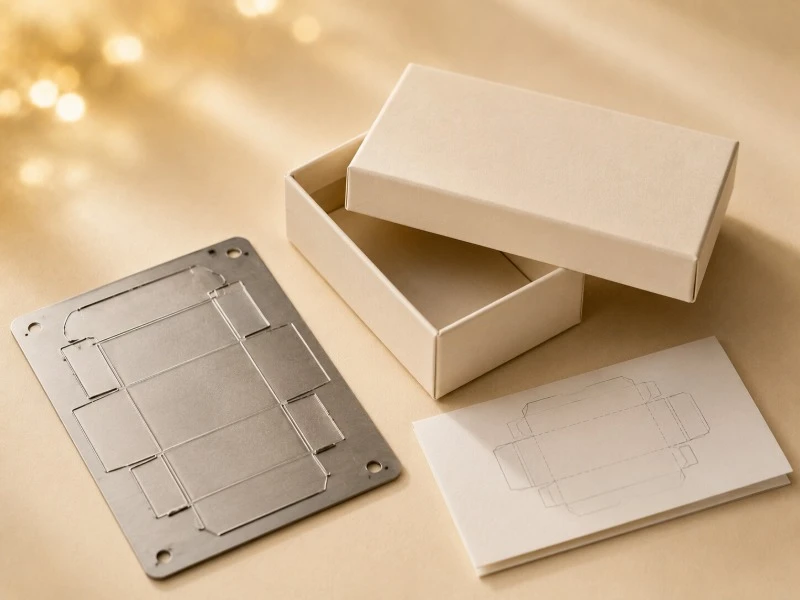
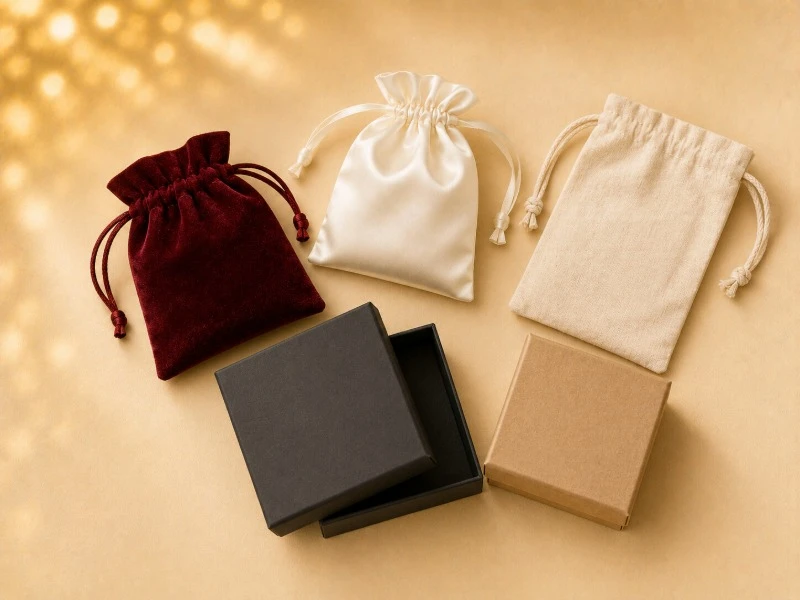
A big share of a custom packaging cost is one-time, and it barely moves with quantity. Tooling and plates — the die, the print plate, the foil plate, the embossing plate — cost the same effort to make whether you run one box or ten thousand. Setup — machine calibration, washing the ink, test runs — is a fixed cost every time production starts. And material minimums bite too: paper, velvet, and ribbon often have their own minimum order quantities, so even if you only want 50 boxes, the material has to be bought at the supplier's minimum.
Add it up and it's a sum that's almost independent of quantity. On 50 units it sits on all 50; on 5,000 it spreads until it's invisible. So when a factory is reluctant to take a tiny order, it usually isn't being difficult — the order genuinely doesn't make money, and can lose it. Understand that, and MOQ stops looking like a snub.
Where small and large orders really differ
The gap isn't only in that fixed cost — small runs are worse on nearly every axis. Materials: small volumes don't get good pricing, and sometimes can't get the good material at all, because suppliers won't break out premium stock for a tiny quantity. Finishes: foil, UV, and embossing all need a plate made first, and that plate cost spread over 50 pieces is brutal per unit. Labor: custom packaging is full of hand operations, and on a small run the workers have barely learned the job before it's over — so efficiency is low and the defect rate is high. A small order isn't just "a bit more per piece." It's disadvantaged from material to finish to labor.
How smart startups test a market without paying for a full custom run
This is the useful part. You don't have to pay for a full bespoke run to find out whether your product works. Five ways in:
1. Use stock styles. Start from the factory's existing standard boxes or bags and add just a logo sticker or a simple printed logo. That skips tooling entirely and drops the cost sharply.
2. Simplify the finish. Drop the plate-based processes — foil, embossing — and simulate them with print. What you save is the plate cost that hits small runs hardest.
3. Use standard structures or shared tooling. Choose a standard structure (a common lid-and-base, say) instead of a bespoke shape, or share a die with other orders — so you're not cutting a mold for one small run.
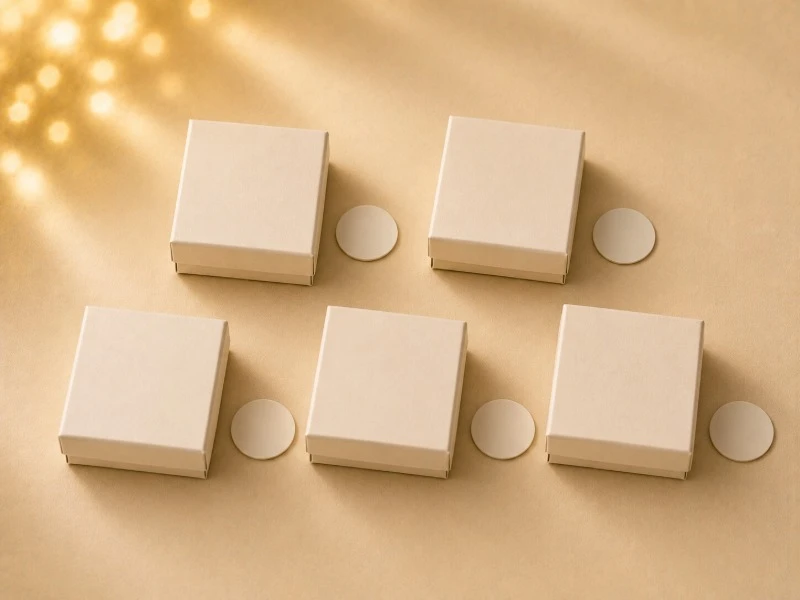
4. Start with a blank sample. Test the market with an unprinted white box or bag first: is the format right, the size right, the customer response there? Validate that, then commit to custom printing.
5. Accept a high unit price on a small run — on purpose. Take the high per-unit cost of a small batch knowingly, because what you're buying isn't cheap packaging — it's market validation at the lowest total spend. The quantity is small, so even at a high unit price the total outlay is low. Once the market says yes, you scale, and the unit price falls on its own.
| Route | What it avoids |
|---|---|
| Stock styles with a logo sticker or simple printed logo | Skips tooling entirely |
| Simplified finish — print instead of foil or embossing | Avoids the plate cost that hits small runs hardest |
| Standard structures or shared tooling | Avoids cutting a mold for one small run |
| A blank, unprinted sample first | Validates format, size and customer response before committing to printing |
| Accepting a high unit price on a small run, knowingly | Keeps total outlay low; what you're buying is market validation |
The mindset shift
Don't treat your first batch as a purchase to squeeze on price. Treat it as buying an answer, cheaply: is this product, in this packaging, worth scaling? The goal isn't to make 50 units cheap — that isn't possible. It's to get the market's verdict for the smallest total spend, and then scale with the answer in hand.
At Genesis Bags (genesisbags.com) we don't brush off a small order or quietly cut its quality because the quantity is low. We'll help you pick the lowest-cost way in — stock styles, a blank sample, a simplified finish — validate the market first, and move to a full custom run when you're ready to scale. The supplier who helps you start cheaply is usually the one you stay with once you're big, because today's 50-piece test is often tomorrow's 50,000-piece order. We'd rather be there for both.
Frequently Asked Questions
Why is the minimum order quantity for custom packaging so high?
Because a big share of the cost is one-time and barely moves with quantity. Tooling and plates — the die, the print plate, the foil plate, the embossing plate — cost the same effort whether you run one box or ten thousand. Machine setup is a fixed cost every time production starts. And materials such as paper, velvet and ribbon have their own supplier minimums. On 50 units that sum lands on all 50; on 5,000 it spreads until it's invisible.
Can I just order 50 units to test the market?
You can — at roughly ten times the unit price of ordering 5,000. And small runs are worse on nearly every axis, not just that fixed cost: small volumes don't get good material pricing and sometimes can't get the good material at all, plate-based finishes are brutal per unit, and workers have barely learned a hand operation before the run is over, so efficiency is low and the defect rate is high.
How can a startup test a market without paying for a full custom run?
Five ways. Use the factory's stock styles with a logo sticker or simple printed logo, which skips tooling entirely. Simplify the finish, dropping plate-based processes like foil and embossing and simulating them with print. Choose a standard structure or share tooling instead of cutting a mold for one small run. Start with a blank, unprinted sample to test format and size. Or knowingly accept a high unit price on a small batch — the total outlay stays low and what you're buying is market validation.
What is a realistic MOQ for custom pouches and gift boxes?
Genesis Bags accepts custom orders from 100 pieces. But the more useful framing is that your first batch isn't a purchase to squeeze on price — it's buying an answer: is this product, in this packaging, worth scaling? The goal is to get the market's verdict for the smallest total spend, then scale, at which point the unit price falls on its own.
There's almost always a lower-cost way to validate first. Genesis Bags (genesisbags.com) is a factory-direct custom packaging manufacturer in Xiamen, China — pouches, rigid boxes, magnetic and drawer boxes. OEM/ODM, MOQ from 100 pcs, worldwide shipping. Tell us your product and budget, and we'll map the cheapest route to a real market test.