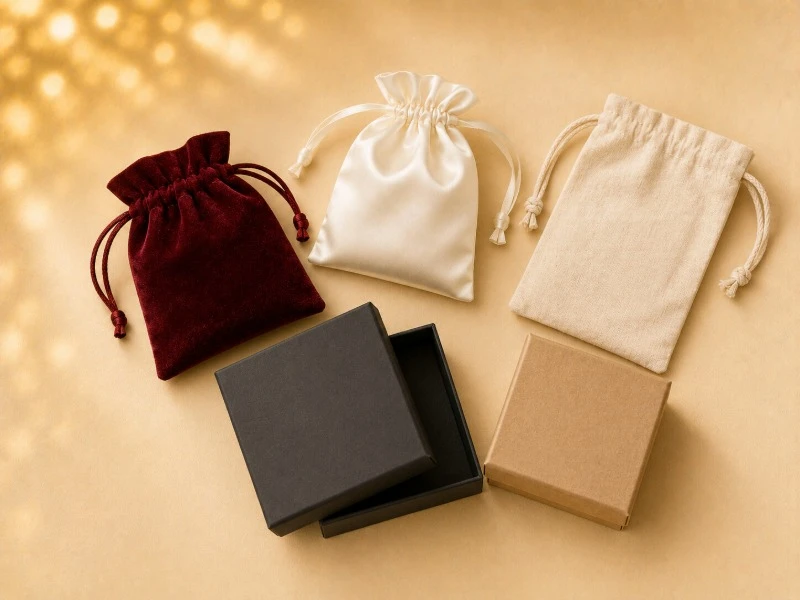

That test matters because the pouch you choose isn't really an aesthetic decision — it's a matching decision. Velvet, satin, and cotton-linen each have a product and a price tier they naturally belong to, and each comes with its own way of being faked. Choose the wrong fabric and your brand drops a tier. Fail to inspect it and you get a lower grade than you ordered. Here's how to get both right.
Velvet — for things that need cushioning
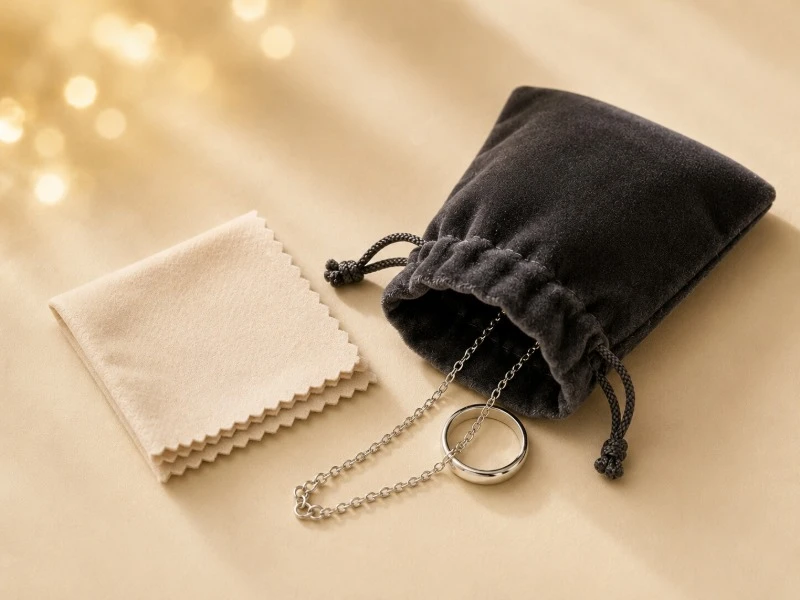
Velvet suits jewelry, watches, and high-end accessories: mid-to-high tier, soft, protective. A good velvet pouch uses high-density short pile, 300 g/m² or heavier, with even color and no shedding when you rub it — part the pile and you can't see the backing. A poor one has sparse pile you can see through, sheds fibers, and looks blotchy.

The common substitution is low-weight velvet passed off as heavy, or synthetic pile passed off as cotton pile — synthetic carries static and feels slightly rough and dry, while cotton pile is soft against the skin. To inspect: rub it ten times and check for shed fibers; hold it to the light to see if the backing shows through; and smell it — a cheap velvet often carries a sour or dye odor.
Satin — for things that need to look luxurious
Satin suits perfume, cosmetics, fine lingerie, and wedding favors: mid-to-high tier, glossy, and rich-looking. A good satin pouch is smooth with no snags, has a soft (not harsh) sheen, drapes well, and doesn't fray at the seams. A poor one has slubs and pulls on the surface, a sheen that's either glaring or dull, and tears the moment it's sewn.
The classic substitution is polyester passed off as real silk. To inspect: check the edges for fraying; scrunch it and release — good material springs back without wrinkles, poor material stays crumpled; hold it to backlight to see if the weave is uneven; and, decisively, run the burn test from the opening of this piece.
One honest note: polyester satin isn't automatically bad. If you want the price and look of polyester satin, that's a perfectly good choice. The problem is only when you pay for silk and receive polyester. Put the fiber content in writing, inspect against it, and you can't be misled either way.
Cotton-linen — for things that need to feel natural
Cotton-linen suits natural, organic, and eco brands — handmade soap, tea, and the like: low-to-mid tier, plain and understated. A good cotton-linen bag has a sensible blend ratio, weighs 200 g/m² or more, feels crisp yet soft, and has been pre-shrunk so it barely shrinks. A poor one is thin enough to see through, feels coarse, shrinks more than 10% on the first wash, and fades.

The substitution here is synthetic blended in to cut cost, or a very low real cotton-linen ratio — synthetic is durable but feels wrong, while cotton-linen is natural but wrinkles easily (that tendency to wrinkle is actually one sign it's the real thing). To inspect: burn a thread — cotton-linen turns to ash, synthetic forms a hard bead; wash-test for shrinkage; and pull it to check elasticity — good material resists deforming.
| Fabric | Suits | Specify | Common substitution | Inspection test |
|---|---|---|---|---|
| Velvet | Jewelry, watches, high-end accessories — mid-to-high tier | High-density short pile, 300 g/m² or heavier, even color, no shedding | Low-weight velvet sold as heavy; synthetic pile sold as cotton pile | Rub ten times and check for shed fibers; hold to light — backing should not show |
| Satin | Perfume, cosmetics, fine lingerie, wedding favors — mid-to-high tier | Smooth with no snags, soft sheen, good drape, seams that don't fray | Polyester sold as real silk | Burn a thread: silk smells like hair and turns to ash, polyester melts to a hard bead |
| Cotton-linen | Natural, organic and eco brands — low-to-mid tier | Sensible blend ratio, 200 g/m² or more, pre-shrunk, crisp yet soft | Synthetic blended in; a very low real cotton-linen ratio | Burn a thread (ash vs bead); wash-test for shrinkage over 10% |
Choosing the wrong fabric costs you a tier
Fabric is matched to purpose, and mismatches are expensive in a quiet way. Jewelry in a cotton-linen bag gets no cushioning, scratches, and looks a tier cheaper than it is. A natural or organic brand in a glossy satin pouch clashes with its own identity and reads as cheap. And low-density velvet sheds onto the product and drives returns. In every case the fabric was fighting the brand instead of lifting it.
The right way to choose is backwards from your product and your brand: what does this item need — cushioning, luxury, or a natural feel — and what tier are you selling at? Then, whatever you pick, put the material spec in writing (weight in gsm, fiber content, shrinkage) and inspect against it, because every one of these fabrics has a cheaper impostor. At Genesis Bags (genesisbags.com) we'll help you match the fabric to the product rather than sell you the one with the best margin, we'll specify it down to the gram, and you're welcome to run the burn test on our seams. A pouch should raise your product a tier — not quietly drop it one.
Frequently Asked Questions
Which pouch fabric should I choose for my product?
Match the fabric to what the product needs. Velvet suits jewelry, watches and high-end accessories — mid-to-high tier, soft and protective. Satin suits perfume, cosmetics, fine lingerie and wedding favors — glossy and rich-looking. Cotton-linen suits natural, organic and eco brands such as handmade soap and tea — low-to-mid tier, plain and understated. Jewelry in a cotton-linen bag gets no cushioning and looks a tier cheaper than it is.
How can I tell real silk satin from polyester?
The burn test. Take a thread from the seam: real silk smells like burning hair and turns to ash, while polyester melts into a hard bead. Polyester satin isn't automatically a bad choice — if you want the price and look of polyester, that's perfectly reasonable. The problem is only paying for silk and receiving polyester, which is why fiber content belongs in writing and inspected against.
What velvet weight should I specify for a pouch?
High-density short pile at 300 g/m² or heavier, with even color and no shedding when rubbed. Hold it to the light: if the backing shows through, the pile is too sparse. Rub it ten times and check for shed fibers, and smell it — cheap velvet often carries a sour or dye odor. The common substitution is low-weight velvet passed off as heavy, or synthetic pile sold as cotton pile, which carries static and feels slightly rough and dry.
What should I specify for cotton-linen bags?
A sensible blend ratio, 200 g/m² or more, a crisp yet soft hand, and pre-shrinking so shrinkage stays minimal. A poor one is thin enough to see through, feels coarse, shrinks more than 10% on the first wash, and fades. Burn a thread to check: cotton-linen turns to ash while synthetic forms a hard bead. Put weight in gsm, fiber content and shrinkage in writing, and inspect against it.
Genesis Bags (genesisbags.com) makes custom velvet, satin, and cotton-linen pouches factory-direct from Xiamen, China — matched to your product and specified down to weight, fiber content, and finish. OEM/ODM, MOQ from 100 pcs, worldwide shipping. Tell us what goes inside and the tier you're selling at, and we'll recommend the fabric and back it with a spec you can inspect.
Explore related products: velvet, satin, cotton, linen